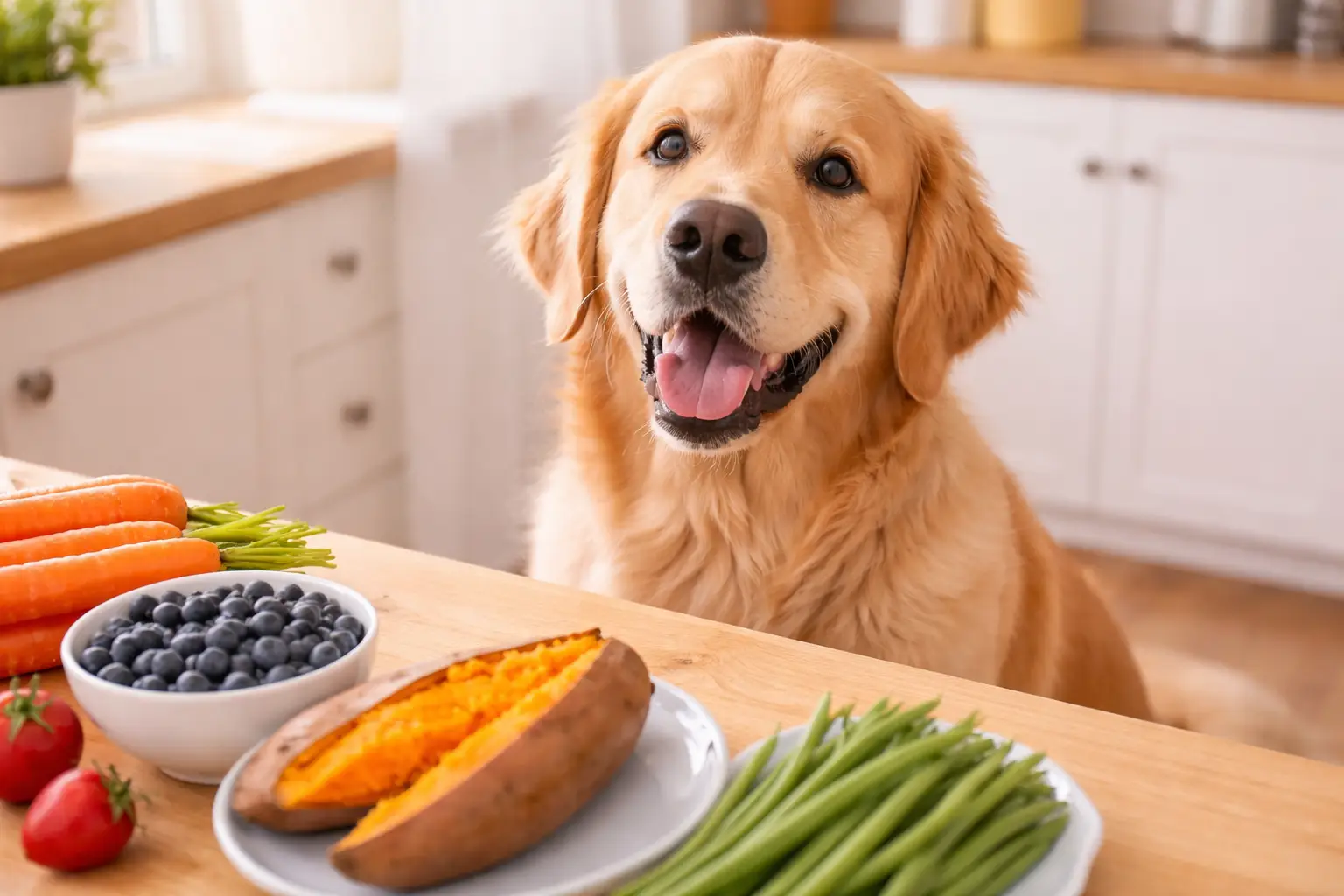
Is it safe for my dog to eat this?
Search any human food. Get instant guidance on what's safe, risky, or toxic for your dog.
1,810+ foods covered
Could Something in Your Kitchen Be Poisoning Your Dog?
Take the 60-second safety assessment and find out your dog's risk score.
Take the safety assessmentBrowse by Category
Explore food safety guides organized by type
Fruits
Berries, melons, citrus & more
Vegetables
Root veggies, leafy greens & more
Proteins
Meat, fish, eggs & legumes
Grains
Rice, oats, bread & more
Dairy
Milk, cheese, yogurt & more
Nuts & Seeds
Almonds, peanuts & more
Plants & Flowers
Houseplants, garden flowers & more
Medications
Human meds, supplements & more
Drinks
Coffee, tea, juices & more
Household Items
Cleaning products & chemicals
Processed Foods
Packaged snacks, junk food & more
Condiments
Sauces, spreads & seasonings
Most Searched Foods
Quick answers to the foods dog owners search for most
Grapes
Not SafeGrapes are highly toxic to dogs and can cause sudden kidney failure. Even small amounts can be fatal. Never feed grapes to dogs.
Chocolate
Not SafeChocolate is highly toxic to dogs. It contains theobromine and caffeine which dogs cannot metabolize. Dark chocolate and baking chocolate are most dangerous.
Xylitol
Not SafeXylitol is one of the most dangerous substances for dogs. It is an artificial sweetener found in many products that causes rapid insulin release and liver failure.
Chicken
SafePlain cooked chicken is one of the best proteins for dogs. It is highly digestible and a great source of lean protein.
Blueberries
SafeBlueberries are one of the best fruits for dogs. They are packed with antioxidants, fiber, and vitamins C and K.
Peanut Butter
CautionPeanut butter can be a great treat for dogs but MUST be xylitol-free. Always check the label before feeding.
Avocado
CautionAvocado flesh poses a lower risk to dogs than commonly believed but the pit is a serious choking and blockage hazard. The flesh contains persin which can cause vomiting, diarrhea, and myocardial damage in large amounts. Caution is advised.
Onions
Not SafeOnions are toxic to dogs in all forms including raw, cooked, powdered, and dehydrated. They cause destruction of red blood cells.
Salmon
CautionCooked salmon is excellent for dogs and rich in omega-3 fatty acids. Raw salmon however can contain a parasite that causes salmon poisoning disease which is potentially fatal.
Carrots
SafeCarrots are one of the best vegetables for dogs. They are low in calories, high in fiber and beta-carotene, and great for dental health.
Clear Vet Review Labels
Food pages reviewed by UK vet Dr Alex Crow carry his name. Other pages are written by our editorial team.
Evidence-Based
Sourced from peer-reviewed research and veterinary literature.
Always Free
Comprehensive food safety information, free for every dog owner.
Recently Added Foods
Our database is actively growing with new food guides
Whippet Foods
CautionWhippets are lean sighthounds with very low body fat making them sensitive to cold and anesthesia. They have elevated heart murmur rates and some sensitivity to certain medications. High-quality protein maintains their lean muscle. They may appear underweight when at a healthy weight.
Food
Can Dogs Eat Salmon
CautionCooked salmon is safe for dogs and an excellent omega-3 source. However raw salmon from the Pacific Northwest carries Salmon Poisoning Disease risk — a potentially fatal condition from a parasite-carried bacteria. Always cook salmon before feeding to dogs. Smoked salmon is too high in sodium.
Food
Rhodesian Ridgeback Foods
CautionRhodesian Ridgebacks are large athletic dogs with elevated dermoid sinus risk, hypothyroidism, and some cardiac conditions. They are generally healthy but hip dysplasia and bloat occur. High-quality protein supports their athletic build. Weight management is important as they age.
Food
Basenji Foods
CautionBasenjis are small African hunting dogs prone to Fanconi syndrome — a kidney disorder affecting nutrient absorption. Affected dogs may need dietary modification. They are also prone to hip dysplasia and progressive retinal atrophy. Antioxidant-rich diet supports eye health.
Food
Can Dogs Eat Tuna
CautionCanned tuna in water without salt is safe for dogs in small amounts occasionally. However tuna is high in mercury and should not be a regular part of the diet. Fresh tuna is also safe in small amounts. Avoid tuna in oil or brine. Frequency should be limited due to mercury accumulation.
Food
Can Dogs Eat Sardines
SafeSardines are one of the best fish for dogs. They are low in mercury, high in omega-3 fatty acids, and available canned in water. Plain water-packed sardines without salt are ideal. Sardines are small enough that soft bones can be eaten safely providing calcium.
Food